
SKY DENTAL CLINIC
Restorative Dentistry
Restorative dentistry is the work of repairing teeth that have been damaged, decayed, or broken down — bringing the tooth back to its proper shape, function, and appearance, and doing it in a way that lasts. The materials and techniques have come a long way in the last decade: tooth-coloured composites that bond directly to enamel, monolithic ceramics milled to fit in a single appointment, root canal treatment done under magnification with rotary instruments that finish in a fraction of the time it used to take. Across all of it the principle is the same — keep as much of the natural tooth as possible, restore what is missing with materials that behave like enamel, and design the result so it disappears into the smile.
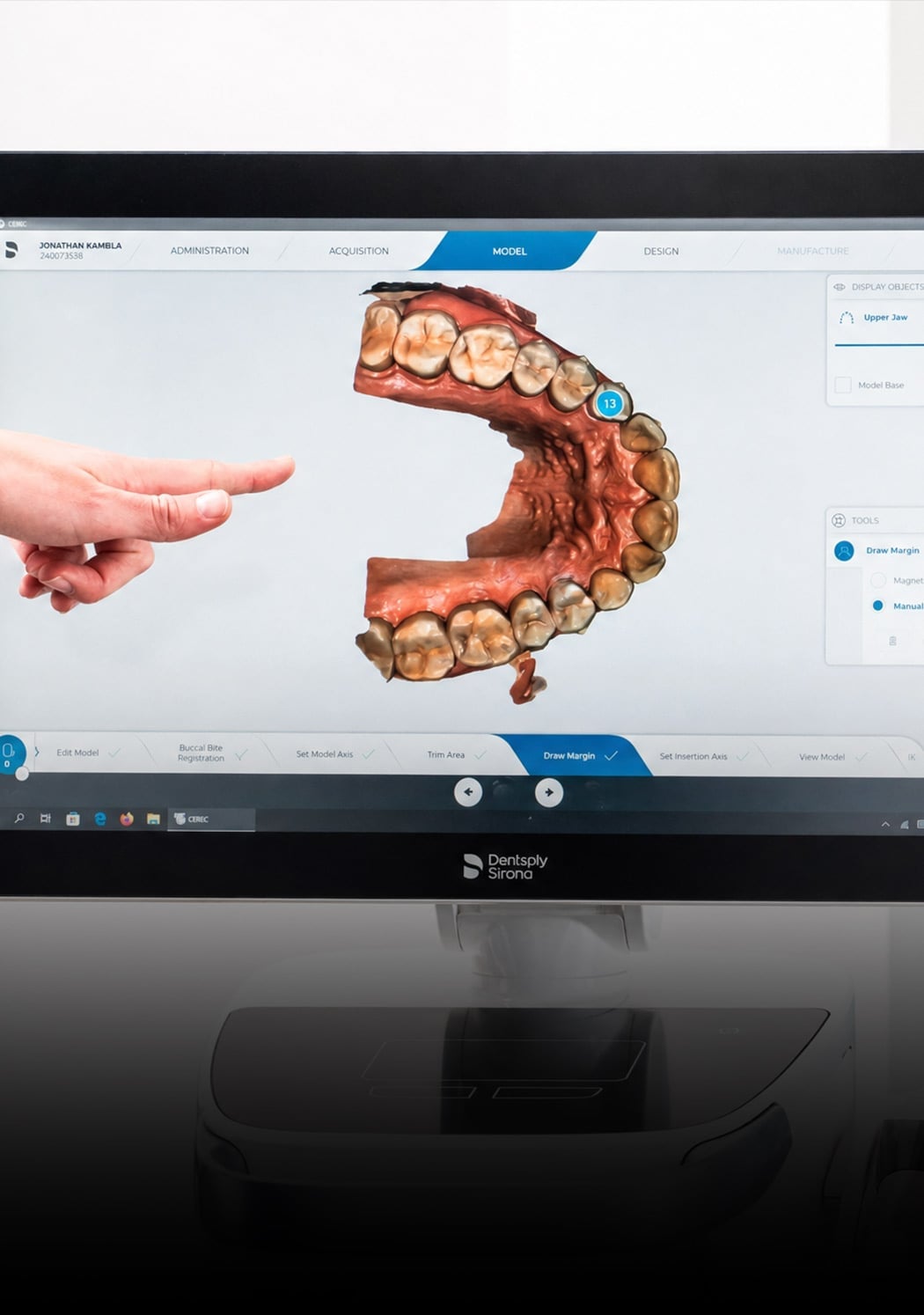
CAD/CAM single-visit ceramic restorations — crowns in an hour
Digital dentistry has changed what's possible in a single appointment. CEREC — the system we use — stands for Chairside Economical Restoration of Esthetic Ceramics, and it's the workflow behind every single-visit crown, inlay, and onlay we place. We scan the prepared tooth with a high-resolution intra-oral camera, design the restoration on screen to fit your bite and the contours of the teeth on either side, and mill it from a solid block of monolithic ceramic in the room next door. The block goes into the milling unit as a small rectangle of porcelain; it comes out, twelve to fifteen minutes later, as your tooth.
What that means in practice: your crown, inlay, or onlay is made and fitted in a single ninety-minute appointment. You arrive with a damaged or broken-down tooth and leave with the final restoration bonded into place. No putty impression to gag on, no temporary restoration to wear for two weeks, no second visit, no second round of numbing, and none of the risk of a temporary crown coming off over a weekend. The digital scan is accurate to within microns, the milling is precise, and because we design the restoration in front of you we can adjust the shape, the contact points, and the bite before the porcelain is ever cut. We colour-match the block to your existing teeth in the chair, polish and glaze the restoration to match the surface lustre of natural enamel, and bond it in. By the time you leave, the finished tooth disappears into your smile.
endodontics
Root Canal Treatment
A root canal becomes necessary when the nerve inside a tooth is infected or dying — usually from deep decay, a crack, or trauma. The treatment is simple in principle: we remove the nerve from inside the tooth, clean and sterilise the empty canal system, and seal it so bacteria can't get back in. The tooth itself stays where it is. Done well, root canal treatment keeps a tooth in the mouth that would otherwise have to be extracted — and a tooth saved is always a better outcome than a tooth replaced.
Built for predictability
Root canal treatment has a reputation it doesn't deserve, and most of that reputation comes from how it used to be done. The work is delicate — the canals inside a tooth are narrow, curved, and often branched in ways that two-dimensional X-rays can't fully show — and the difference between a comfortable, predictable result and a frustrating one comes down to whether the clinician can see what they're working on and reach every corner of the system they're trying to clean. We have invested in the equipment that lets us do exactly that.
CBCT and 3D imaging
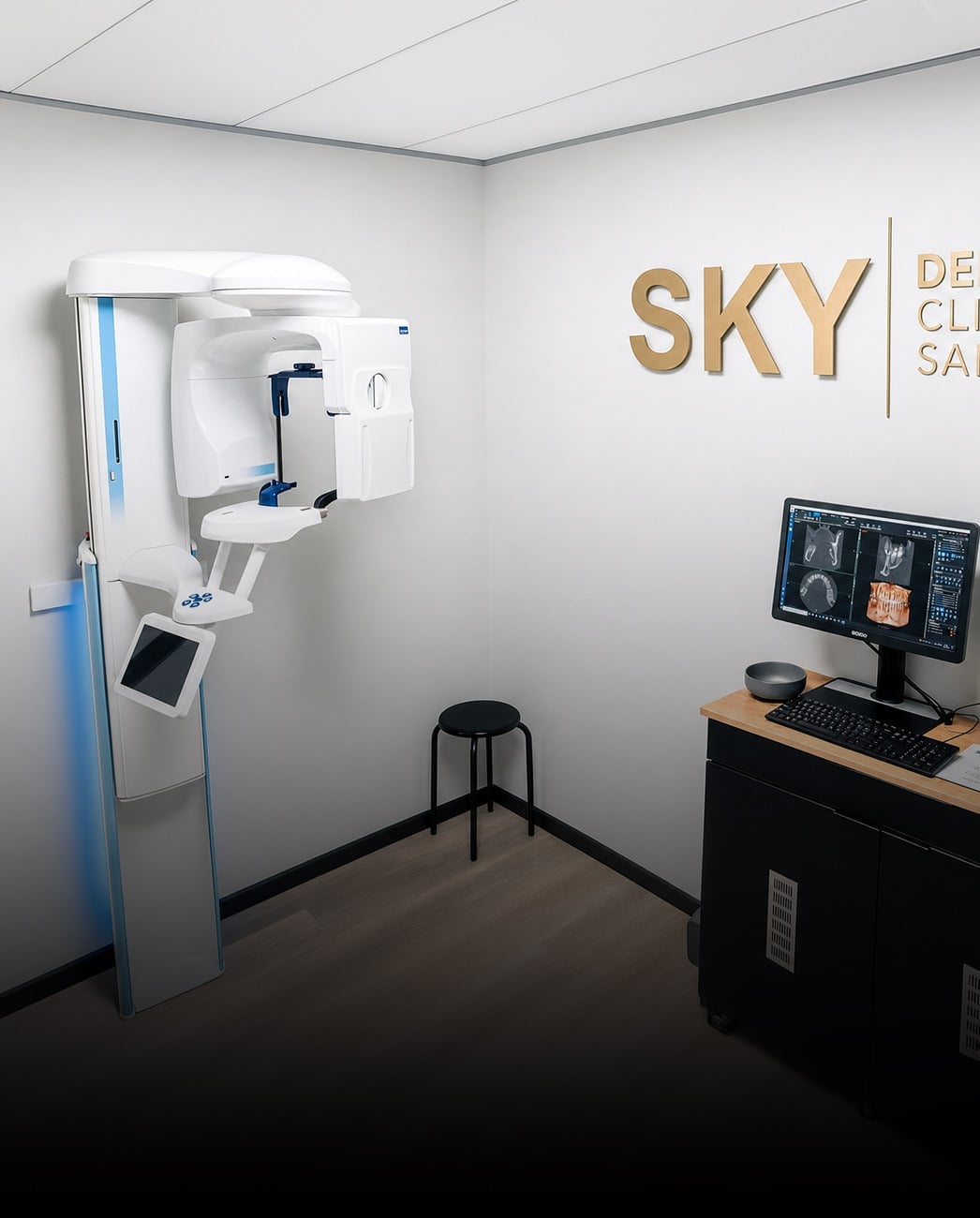
Before we start, we take a cone beam CT scan of the tooth. Where a traditional X-ray flattens the canal system into a single image, the CBCT shows it in three dimensions — every canal, every branch, every curve, and the surrounding bone. We can see an extra canal that would have been missed, a hairline fracture invisible on a flat film, or a sinus or nerve close to the root that changes how we approach the case. Knowing the anatomy in advance is the single biggest factor in getting a clean, predictable result.
Laser disinfection
Once the canals are mechanically cleaned, we use laser disinfection to sterilise the system. The laser energy reaches into the side branches and dentinal tubules that instruments and rinses can't physically clean — the places where bacteria hide and where treatments fail. It is a quiet, painless step that materially improves the long-term success of the treatment, and it is one of the reasons we are comfortable doing root canal work on teeth that would once have been written off.
Magnification — from loupes to the operating microscope
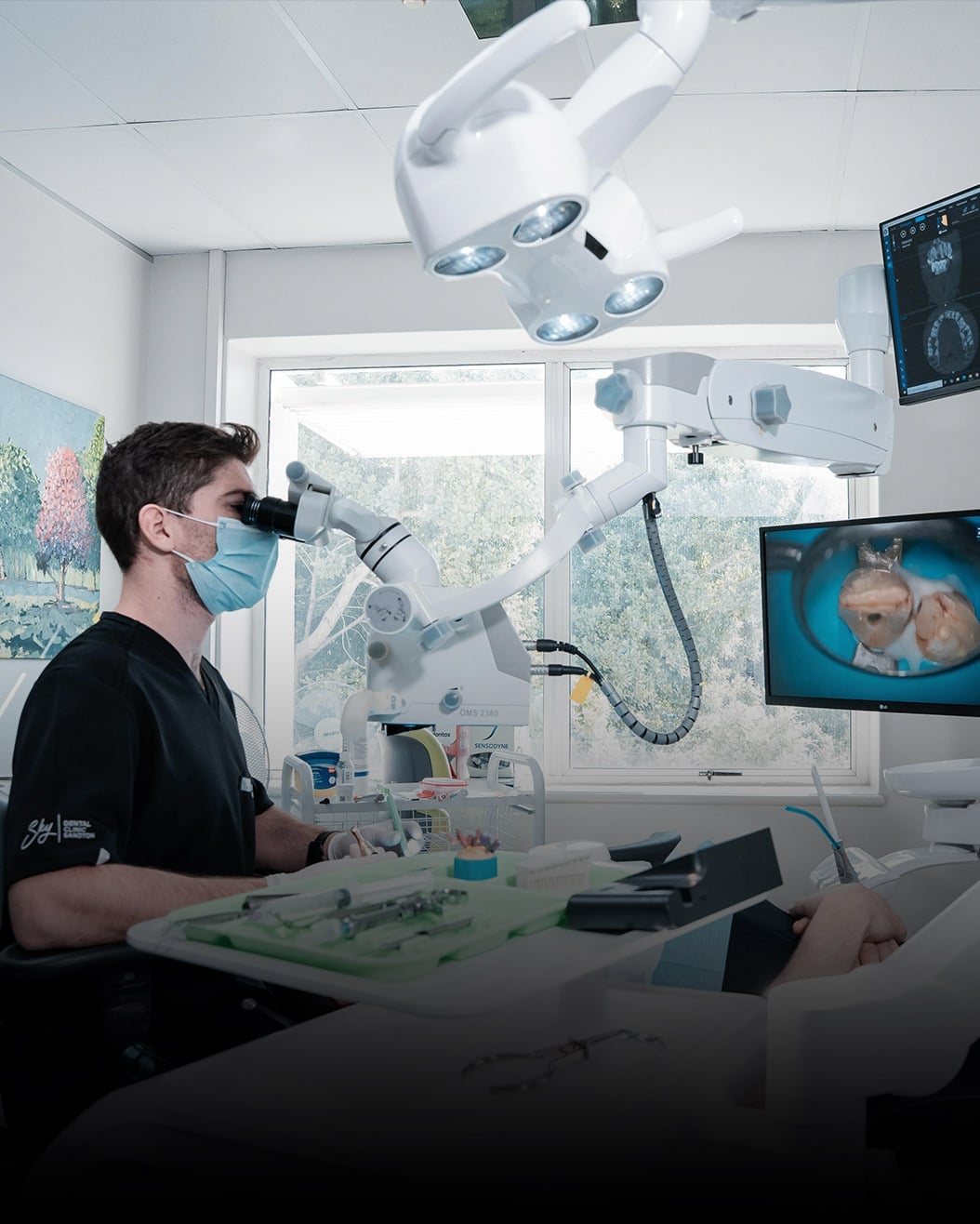
Every step of the treatment is done under magnification. Our dentists work in loupes as a matter of course, and for the finer stages of root canal work we use a surgical operating microscope, which magnifies the field by twenty times or more and lights it cold and shadow-free. At that scale we can see things that are simply invisible to the naked eye: a hidden canal opening, the subtle change in colour where the canal wall ends and dentine begins, a small crack that decides whether the tooth is restorable at all. Better vision means cleaner work, and cleaner work means a tooth that lasts.
What to expect
Most root canal treatments at Sky Dental are completed in one or two appointments, depending on the complexity of the tooth and the state of the infection. The procedure is done under local anaesthetic, with sedation available if you prefer, and modern technique means the appointment itself is no more uncomfortable than a filling. Once the canal system is sealed, the tooth is restored — usually with a crown or onlay, often on the same day using our CAD/CAM workflow — to protect it against the forces of chewing for the long term. With good restoration and good hygiene, a root-canal-treated tooth can last as long as any other in the mouth.
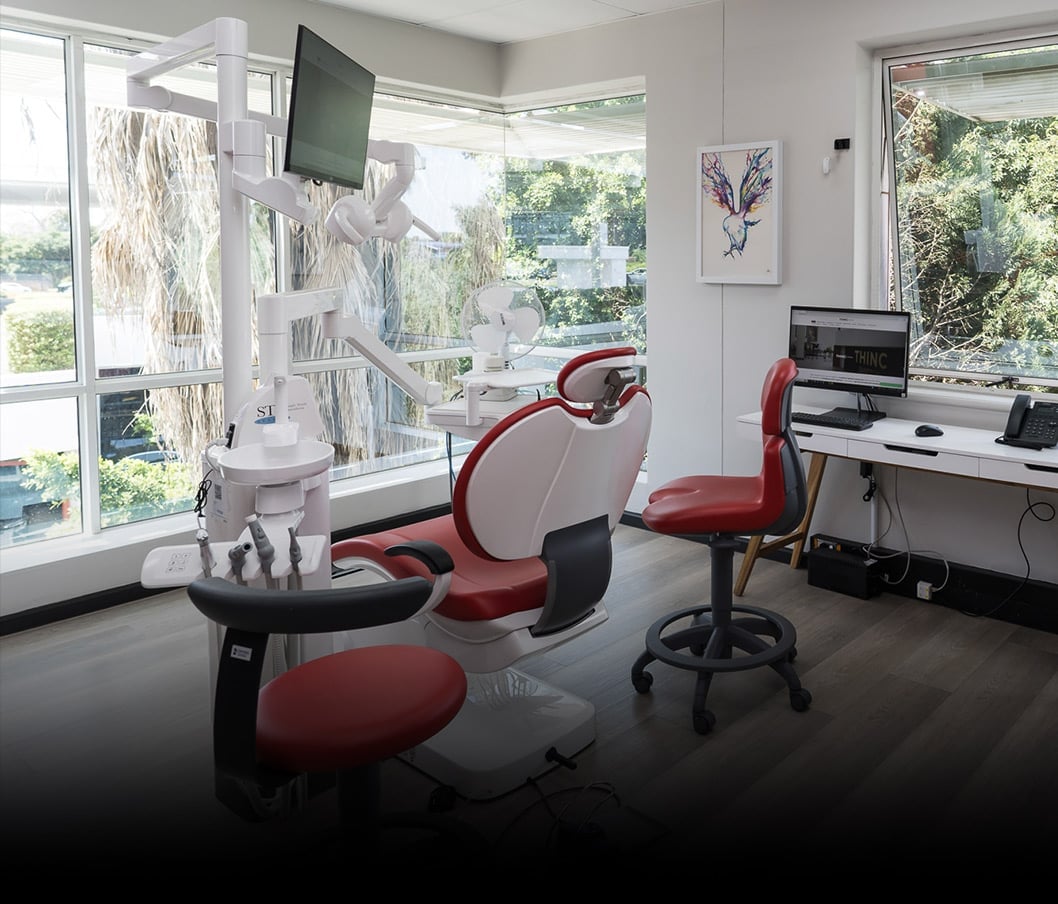
resin composite
White Fillings
A white filling is tooth-coloured resin, bonded directly to the tooth and built up in layers to replace the part that has been lost to decay, a chip, or wear. Done properly, the filling becomes part of the tooth — sealed against the enamel, shaped to your bite, and finished so the only person who knows it is there is you.
We don't place amalgam
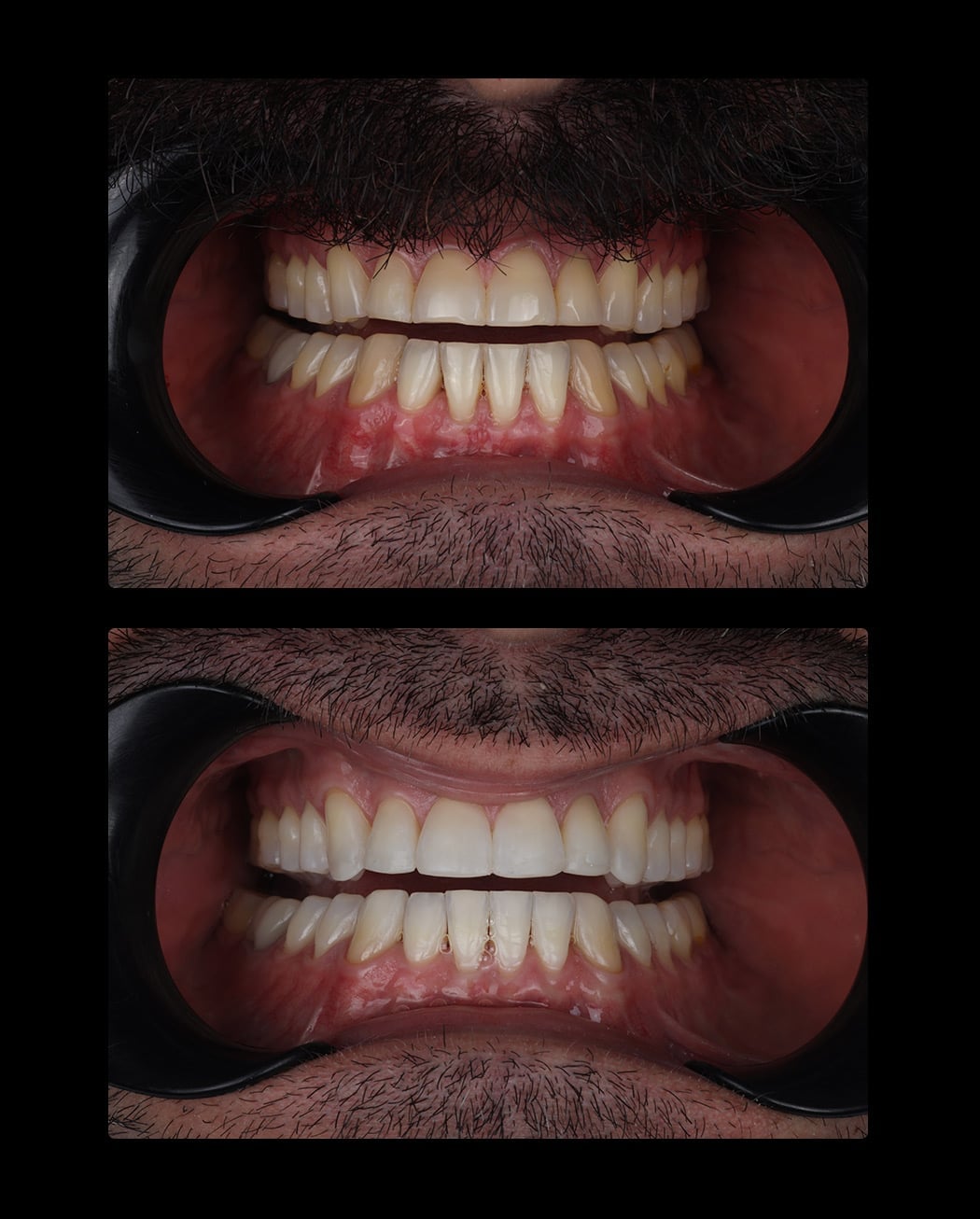
Sky Dental is a mercury-free practice — we don't place amalgam (silver) fillings, full stop. There are two reasons. The first is biological: composite bonds chemically to the tooth, whereas amalgam has to be locked in mechanically, which means cutting away healthy tooth structure to create an undercut that holds the silver in place. Composite lets us be far more conservative — we remove the decay, and not much else. The second is aesthetic: a well-placed composite is invisible; a silver filling never is. For patients who arrive with old amalgams that are failing, leaking, or cracking the tooth around them, we routinely replace them with composite as part of a careful, well-sealed treatment.
Shade-matched to your tooth
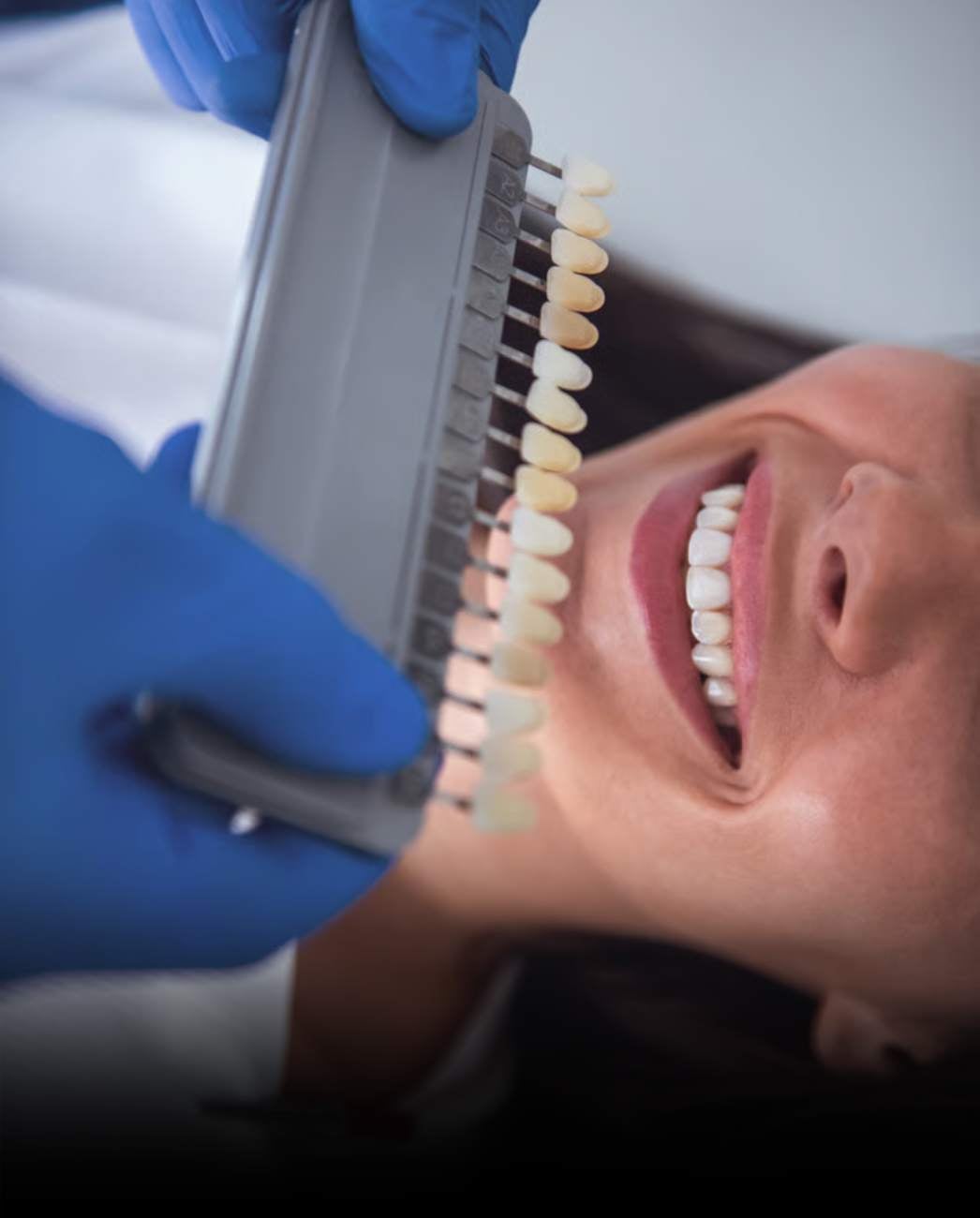
We keep a full range of composite shades on hand, from the warm yellows of an older patient's teeth to the cooler, brighter whites of a younger smile, and a set of tints for the subtler effects — the slightly translucent edge of a front tooth, the warmer body underneath. The right shade is chosen at the chair, against your actual tooth, in the lighting we work in. A filling that is half a shade off will catch the eye every time you smile; one that is matched properly disappears.
Layered, sculpted, and polished smooth
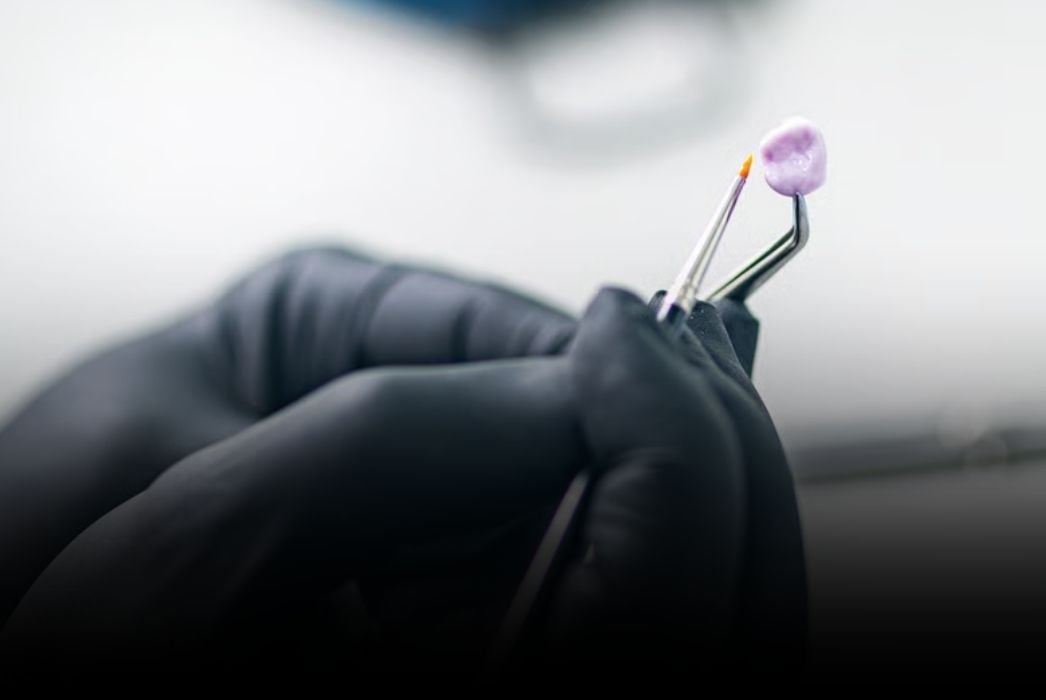
Composite is built up in thin layers, each one cured with a light before the next goes on, and shaped by hand to match the anatomy of the tooth — the cusps and grooves of a back tooth, the subtle curves and surface texture of a front one. The finished restoration is then polished through a sequence of progressively finer discs and pastes until the surface is glass-smooth. That polish matters: a rougher filling collects plaque and stain and feels different against the tongue; a properly polished one feels like enamel.
Bonded — not just packed in
The chemistry is what makes the modern composite filling work. The resin is bonded to the tooth at the microscopic level, which seals the margin between the filling and the enamel and helps stop decay from creeping back in underneath. A bonded filling supports the remaining tooth structure rather than wedging it apart, which is one of the reasons composites are less likely than the old silver fillings to crack the tooth they're meant to be saving.
The right tool for the right job
Composite is the right answer for small to medium fillings, chipped front teeth, worn edges, and the minor reshaping that finishes a cosmetic case. Where the cavity is larger, where a cusp has broken off, or where the tooth has been root-canal-treated and needs full coverage, a CAD/CAM ceramic inlay, onlay, or crown is the stronger long-term choice — and we will tell you honestly which one your tooth needs. Every white filling is done in a single visit, under local anaesthetic where required, with no lab work and no second appointment.