
SKY DENTAL CLINIC
Dental Implants
A dental implant is the closest thing modern dentistry has to a replacement tooth. It is a small titanium post placed into the jawbone, where it integrates with the bone over a few months to become a permanent foundation for a porcelain crown, a bridge, or a full set of teeth. Implants look, feel, and function like natural teeth — you brush and floss them the same way, you eat what you like, and a well-placed implant can last a lifetime.
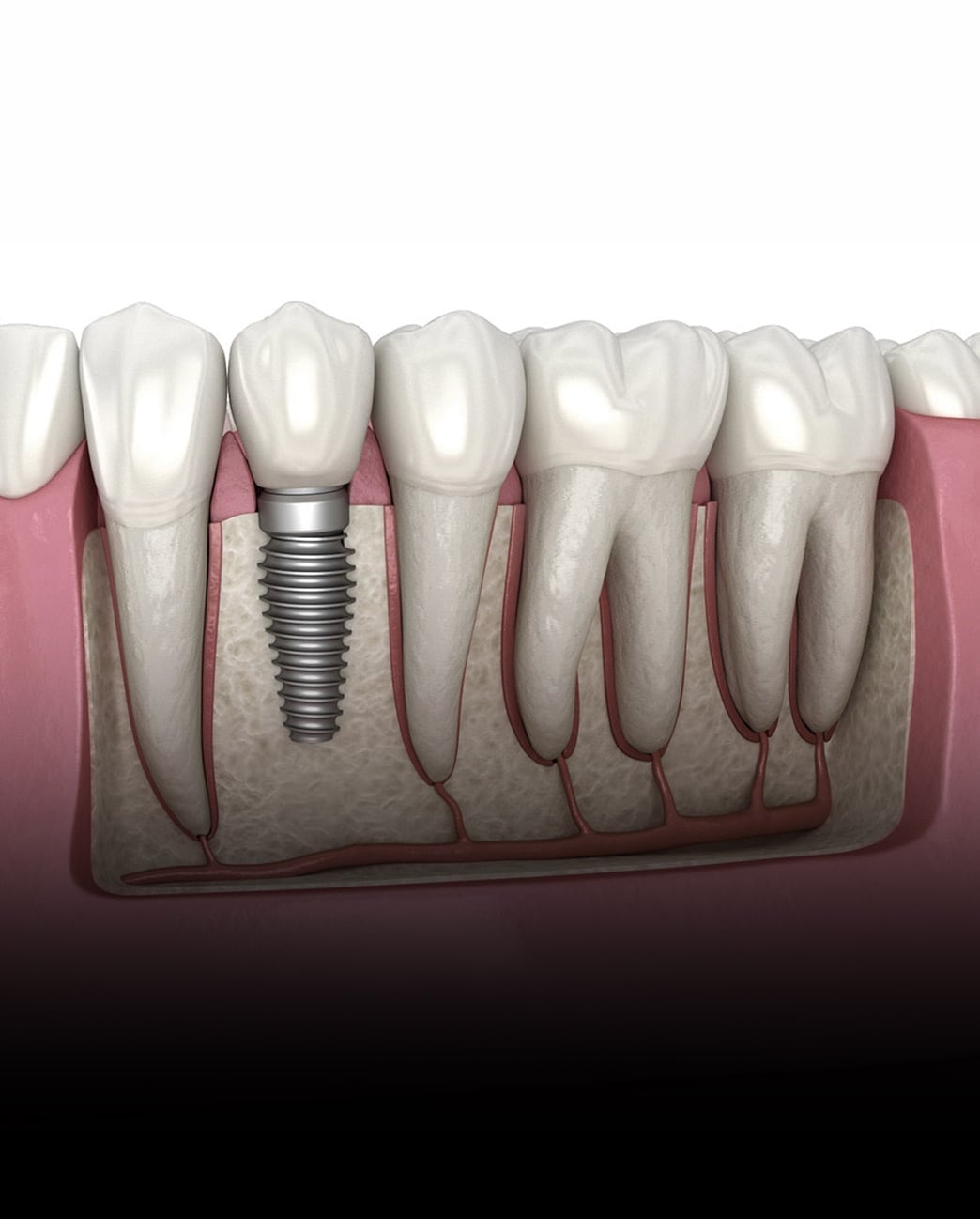
Replacing missing teeth
Whether you're missing a single tooth, several teeth, or an entire arch, implants offer a solution that doesn't compromise the teeth on either side. A single implant replaces a single tooth without grinding down its neighbours for a bridge. Several implants can support a fixed bridge across a longer gap. And for patients who have lost all of their teeth, a small number of implants can anchor a full set of fixed teeth — no plate, no adhesive, no removing them at night.
A comprehensive evaluation comes first
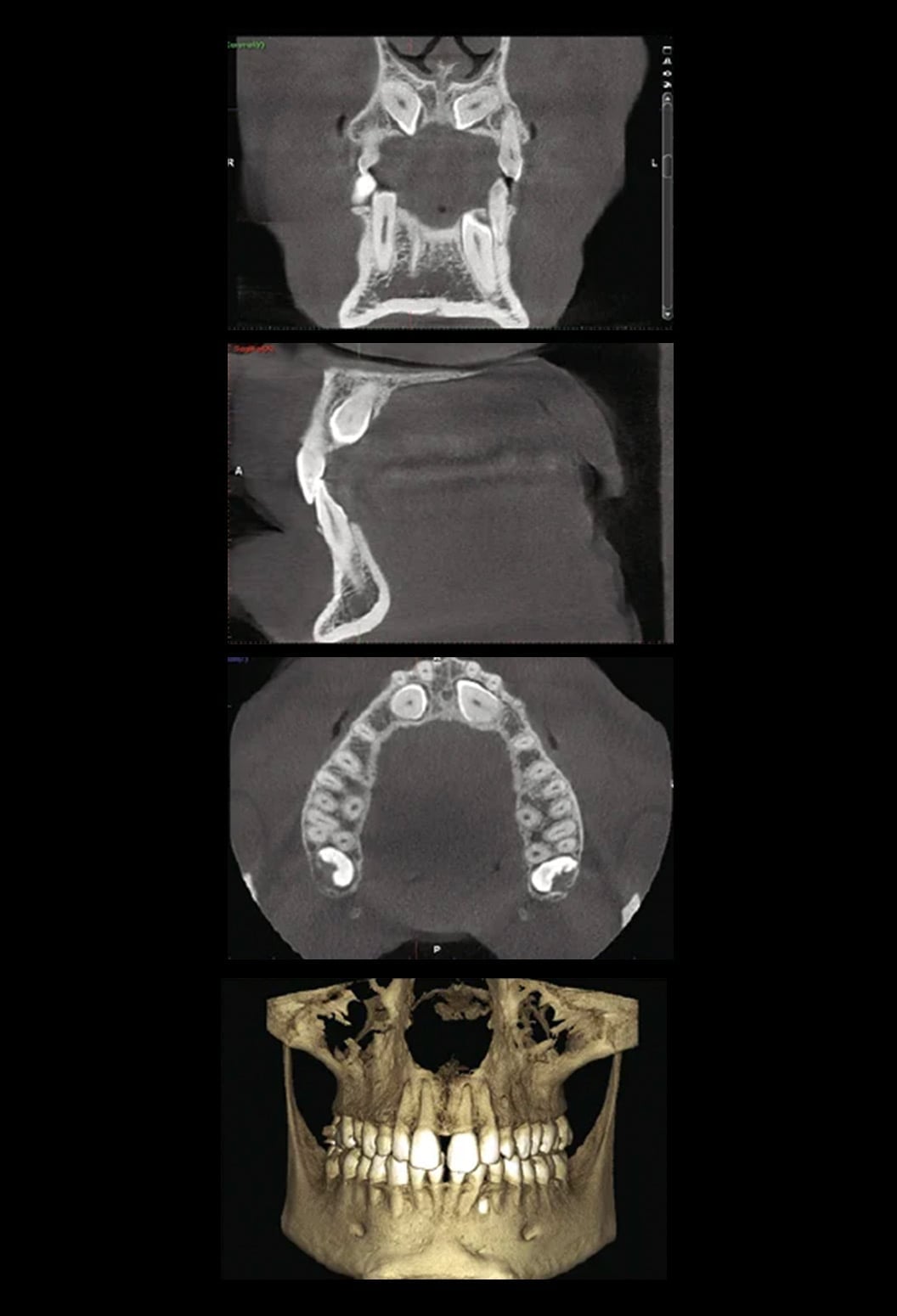
Implants are an investment in your dental health, and the right candidate is one where they will last. Before we place anything, we do a full evaluation — your medical history, the health of your gums, the condition of the surrounding teeth, and a CBCT scan of the jaw to measure the volume and quality of the bone where the implant will sit. We look at how you bite, how you grind, and how you keep your teeth clean, because those are the factors that decide whether an implant lasts ten years or thirty. If something needs to be addressed before we place — gum disease treated, bone built up, a bite adjusted — we'll tell you, and we'll fix it first.
Guided implant surgery
Every implant we place is digitally planned and surgically guided. We combine the three-dimensional bone data from the CBCT scan with the surface detail of an intra-oral scan to build a precise digital model of your jaw, then design the implant placement on screen — the exact position, depth, and angulation that gives the best biological and aesthetic result. From that plan we print a surgical guide that fits over your teeth on the day of surgery and directs the implant into place exactly as designed.
The advantage is predictability. Guided surgery means the implant goes where it is meant to go, at the depth and angle that work with the final crown, well clear of the nerves, sinuses, and roots of the neighbouring teeth. The procedure is less invasive, the recovery is gentler, and the result is the same one you signed off on at the planning appointment — no surprises.
Specialist care for complex cases
Not every case is straightforward. Some patients have lost bone over the years and need it rebuilt before an implant can be placed; others need gum tissue grafted to give the final crown a natural-looking edge; some need a full set of teeth rebuilt across the upper or lower jaw, on implants, in a single coordinated treatment plan. For those cases we have an in-house periodontist — a specialist in the foundation of teeth and the surgery that supports implants — working alongside the rest of the team. Bone grafts, gum grafts, sinus lifts, and full-mouth rehabilitations are planned and delivered under one roof, by clinicians who are doing them every week.
What to expect
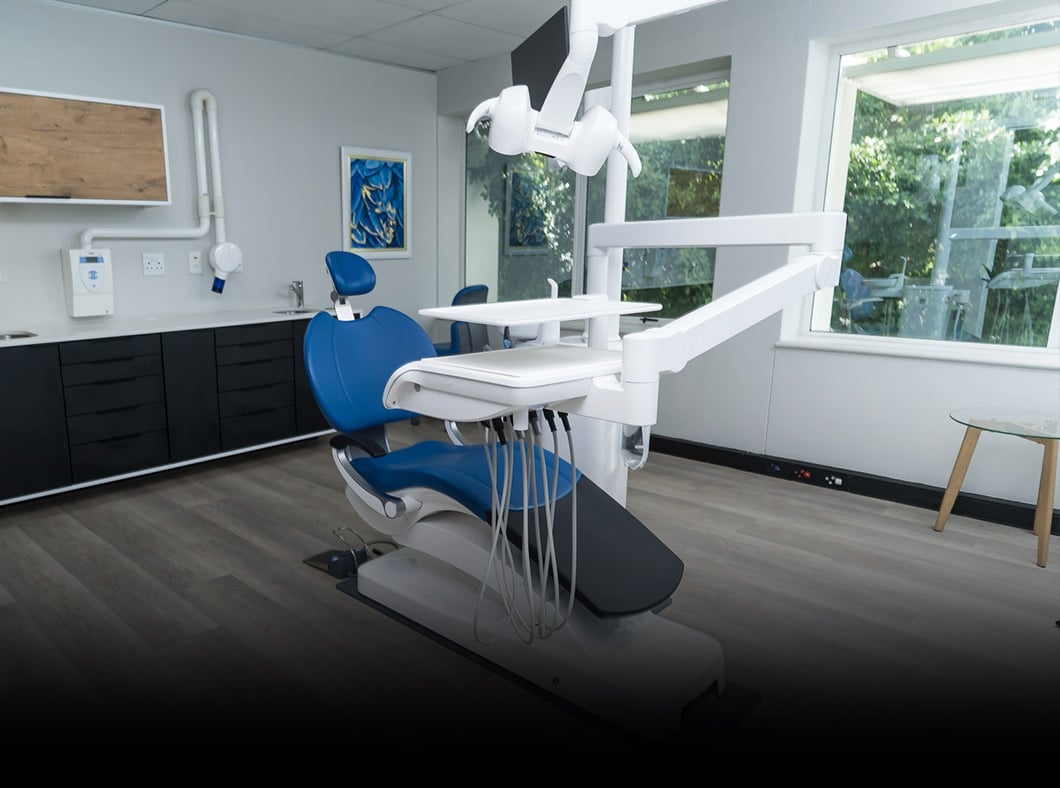
Implant treatment usually unfolds in three stages. First, the planning appointment — scans, photographs, evaluation, and the digital design. Then the surgical appointment, where the implant is placed under local anaesthetic, with sedation available if you prefer. The implant heals quietly under the gum for three to six months while it integrates with the bone, and during that time you'll have a temporary tooth where appropriate so you never go without. Finally, we restore — the porcelain crown, bridge, or full arch is designed digitally, milled or hand-crafted by our ceramist, and fitted onto the implant. From that point on, it is simply a tooth.