
SKY DENTAL CLINIC
Periodontist
Your teeth are only as healthy as the gum and bone that hold them in place. Periodontics is the branch of dentistry that looks after that foundation — diagnosing and treating gum disease, rebuilding lost bone and gum tissue, and placing implants where teeth can no longer be saved. It is specialist work, and at Sky Dental it is done by an in-house periodontist, working alongside the rest of the team under one roof. As far as we know, no other practice in the area offers it — most clinics refer their gum and implant work out, which means a second waiting room, a second set of files, and a second clinician who has to be brought up to speed. Here, the specialist is part of the team that knows you.
What periodontitis is, in simple terms
Periodontitis is gum disease in its serious form. It starts quietly: gums that bleed when you brush, a bit of swelling, breath that isn't quite fresh. Left alone, the bacteria that cause it work their way down below the gumline and start to dissolve the bone that holds your teeth in place. The teeth loosen, the gums recede, and eventually the teeth are lost — not because the teeth themselves failed, but because the foundation beneath them did. It is the single biggest cause of tooth loss in adults, and it is largely silent until it is advanced. The good news is that it is treatable at every stage, and the earlier we catch it the more of the original foundation we can save.
Comprehensive evaluation
Periodontal treatment starts with a thorough assessment, because the right plan depends on knowing exactly what we're working with. We measure the depth of the pockets around every tooth, chart bleeding and recession, and take a CBCT scan to see the bone in three dimensions — how much is left, where it has been lost, and what can be rebuilt. We review your medical history, because conditions like diabetes and habits like smoking change how the gums heal. We look at your bite, because teeth that take more force than they should lose bone faster. By the end of the evaluation you'll have a clear picture of the state of your gums and bone, the stage of any disease present, and a written plan for what to treat first, what to watch, and what the long-term outlook is.
Long-term care
Periodontitis isn't cured in a single visit — it is controlled, and then kept controlled. The active phase of treatment usually involves deep cleaning below the gumline, sometimes under local anaesthetic, to remove the hardened deposits the bacteria live in. Where the disease is more advanced we may do gum or bone grafting to rebuild what has been lost. Once the gums are stable, you move onto a maintenance programme — more frequent hygiene visits, usually every three to four months, with the periodontist reviewing the deeper measurements at set intervals. Patients who stay on a proper maintenance programme keep their teeth; patients who drift off it tend not to. We design the programme around your risk, your habits, and your life, and we hold you to it gently because it is the single most reliable thing you can do to protect the result.
Replacement of teeth with implants
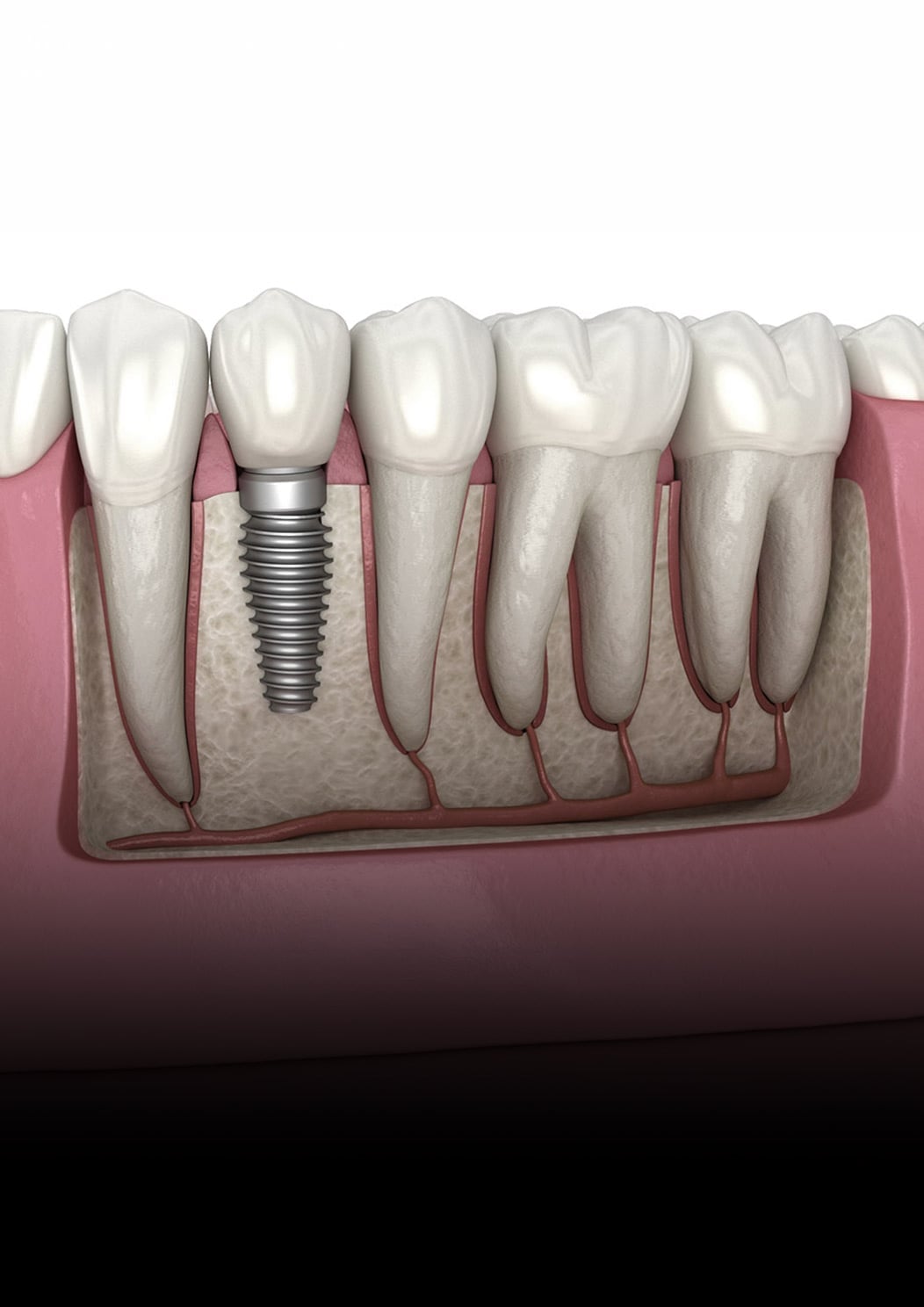
When a tooth has been lost to periodontitis — or is beyond saving — the periodontist is the right clinician to place the implant that replaces it. The same expertise that treats gum and bone disease is the expertise that builds bone back up, manages the soft tissue around an implant, and places the implant itself in a foundation strong enough to hold it for life. Single teeth, multiple teeth, full arches on implants: all planned digitally, surgically guided, and delivered by a specialist who works on the foundation every day. For complex cases — sinus lifts, block grafts, full-mouth implant rehabilitations — having a periodontist in the practice means the planning, the surgery, and the long-term care all happen with the same team, in the same chair.
Restoration of function and quality of life
Patients who have lived with advanced gum disease, loose teeth, or missing teeth tend to describe the same things: meals chosen around what they can chew, smiles held back in photographs, a low-level worry that the next tooth is the next one to go. The goal of periodontal and implant treatment is to take all of that off the table. Teeth that feel solid again. A mouth you can eat anything with. A smile you don't think twice about. The clinical work is only half of it — the other half is what the work gives back, which is the ordinary business of eating, talking, and laughing without thinking about your teeth.
Why an in-house periodontist matters
Most patients who need specialist gum or implant work are referred out — to a separate practice, a separate clinician, and a separate set of notes — and then referred back to their dentist for the restoration. The hand-offs cost time, and they cost information. At Sky Dental the periodontist sits in the same building as the dentist who will restore the implant, the hygienist who will maintain it, and the ceramist who will craft the final crown. Cases are planned around a single table, not across email threads. Treatment moves faster, the records are unified, and on the day of surgery the team already knows you. It is the way specialist dentistry should be done, and as far as we know it is unique in the area.