SKY DENTAL CLINIC
White Fillings
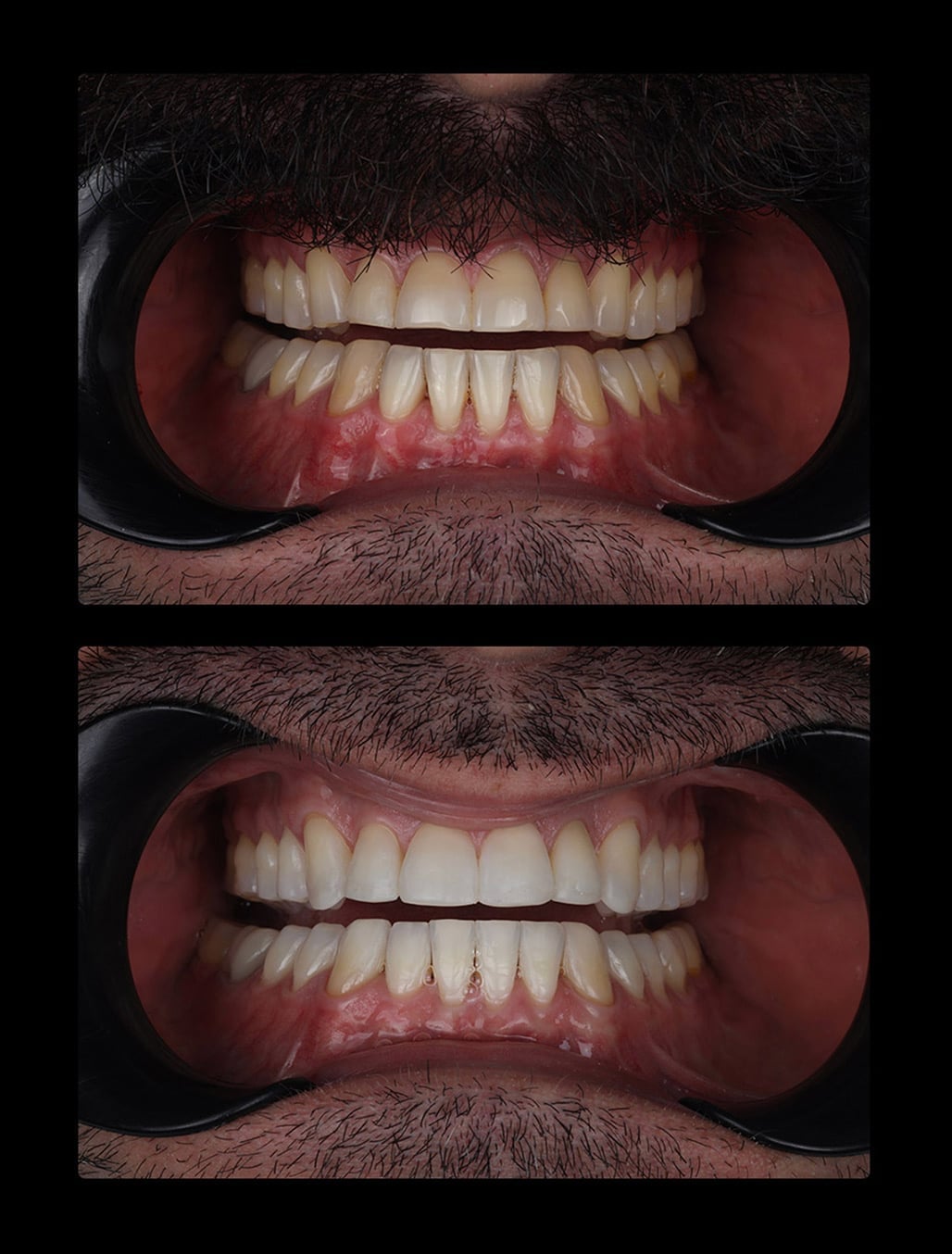
A white filling is tooth-coloured resin, bonded directly to the tooth and built up in layers to replace the part that has been lost to decay, a chip, or wear. Done properly, the filling becomes part of the tooth — sealed against the enamel, shaped to your bite, and finished so the only person who knows it is there is you.
We don't place amalgam
Sky Dental is a mercury-free practice — we don't place amalgam (silver) fillings, full stop. There are two reasons. The first is biological: composite bonds chemically to the tooth, whereas amalgam has to be locked in mechanically, which means cutting away healthy tooth structure to create an undercut that holds the silver in place. Composite lets us be far more conservative — we remove the decay, and not much else. The second is aesthetic: a well-placed composite is invisible; a silver filling never is. For patients who arrive with old amalgams that are failing, leaking, or cracking the tooth around them, we routinely replace them with composite as part of a careful, well-sealed treatment.
Shade-matched to your tooth
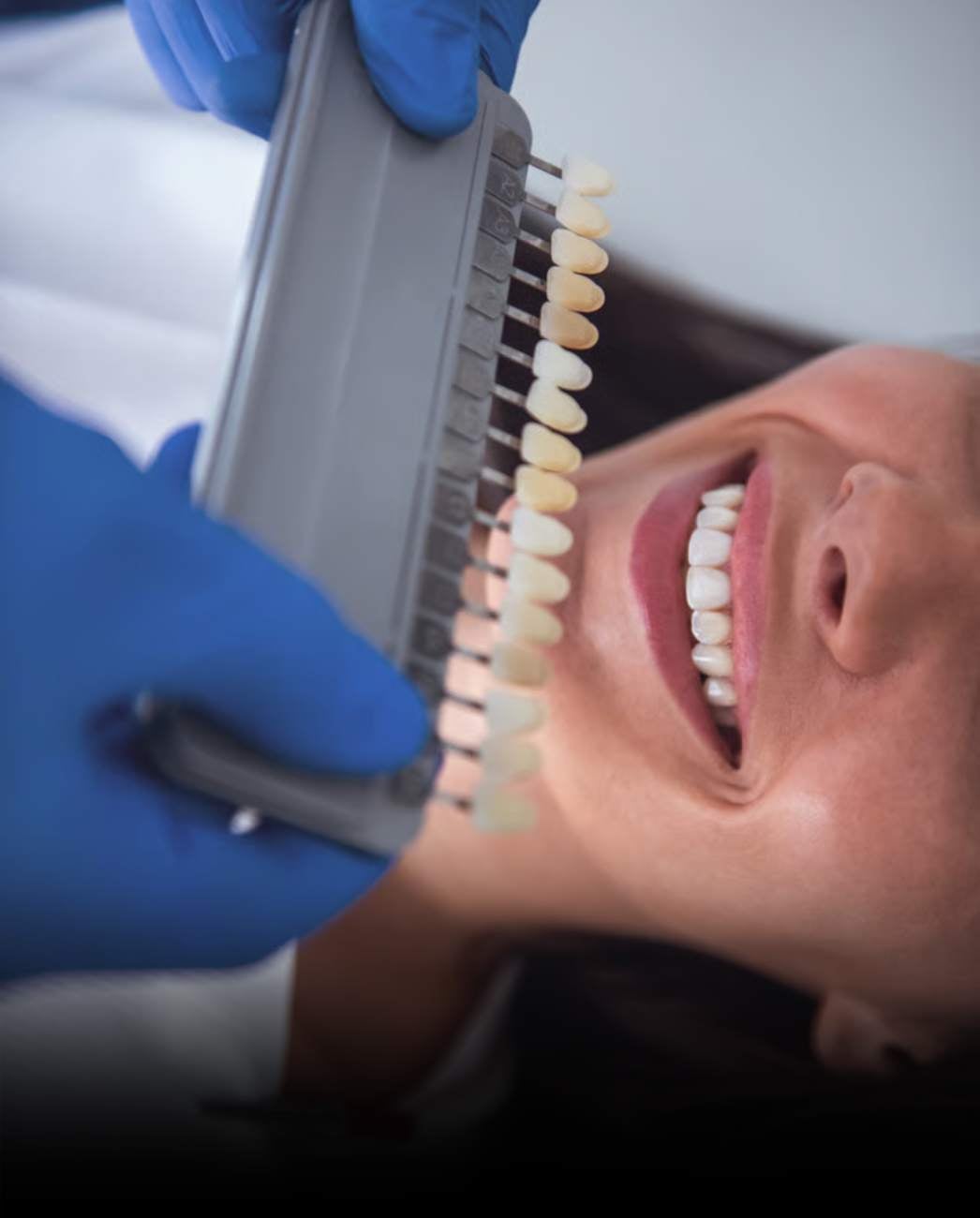
We keep a full range of composite shades on hand, from the warm yellows of an older patient's teeth to the cooler, brighter whites of a younger smile, and a set of tints for the subtler effects — the slightly translucent edge of a front tooth, the warmer body underneath. The right shade is chosen at the chair, against your actual tooth, in the lighting we work in. A filling that is half a shade off will catch the eye every time you smile; one that is matched properly disappears.
Layered, sculpted, and polished smooth
Composite is built up in thin layers, each one cured with a light before the next goes on, and shaped by hand to match the anatomy of the tooth — the cusps and grooves of a back tooth, the subtle curves and surface texture of a front one. The finished restoration is then polished through a sequence of progressively finer discs and pastes until the surface is glass-smooth. That polish matters: a rougher filling collects plaque and stain and feels different against the tongue; a properly polished one feels like enamel.
Bonded — not just packed in
The chemistry is what makes the modern composite filling work. The resin is bonded to the tooth at the microscopic level, which seals the margin between the filling and the enamel and helps stop decay from creeping back in underneath. A bonded filling supports the remaining tooth structure rather than wedging it apart, which is one of the reasons composites are less likely than the old silver fillings to crack the tooth they're meant to be saving.
The right tool for the right job
Composite is the right answer for small to medium fillings, chipped front teeth, worn edges, and the minor reshaping that finishes a cosmetic case. Where the cavity is larger, where a cusp has broken off, or where the tooth has been root-canal-treated and needs full coverage, a CAD/CAM ceramic inlay, onlay, or crown is the stronger long-term choice — and we will tell you honestly which one your tooth needs. Every white filling is done in a single visit, under local anaesthetic where required, with no lab work and no second appointment.