SKY DENTAL CLINIC
Clear Aligner Therapy
Clear aligners are modern orthodontics — a series of thin, transparent trays that move your teeth gradually into the position you and your dentist have agreed on. They have replaced fixed braces for the great majority of adult and teenage cases we see, and for good reason: they are nearly invisible, comfortable, removable for eating and cleaning, and digitally planned from the first appointment to the last. Whether the goal is to fix crowding, close a gap, correct a bite, or straighten your smile before veneers or whitening, aligners are usually the right place to start.
How aligners work
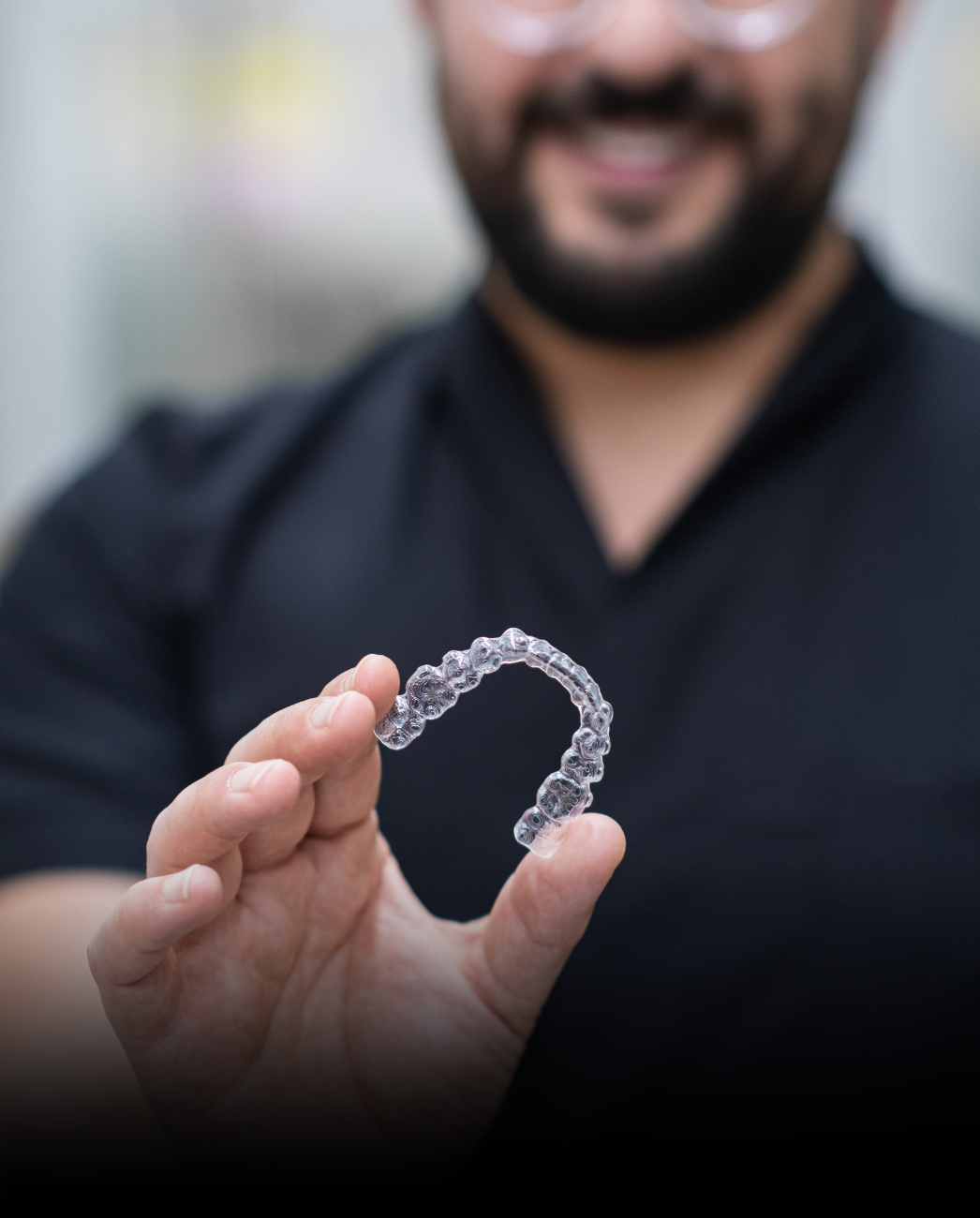
Treatment starts with a digital scan — no putty impressions — and a set of clinical photographs. From that scan we build a precise three-dimensional model of your teeth and bite, then plan the movement of every tooth from where it is now to where it needs to be. The plan is converted into a sequence of aligners, each one a fraction of a millimetre different from the last. You wear each aligner day and night, taking them out only to eat and clean your teeth, and the teeth follow the trays through the planned movements one step at a time.
See the result before you start
Because the plan is built digitally, we can show you a simulation of your final smile before a single aligner is made. You'll see your teeth animate from their current position through to the finished result, with the timing, the number of trays, and the predicted shape of the smile laid out in front of you. If something isn't quite right — the canine could come back a touch, the midline needs adjusting, the final width feels too wide — we change the plan there and then. Nothing is ordered until you've signed off on the outcome.
Why aligners over fixed braces
Fixed braces still have their place, but for most cases aligners are simply a better patient experience. They are clear, so most people won't notice you're wearing them. They are smooth, so there are no brackets or wires to cut the inside of your lips and cheeks. They come out for meals, which means you eat what you like and brush and floss your teeth normally — no food trapped in brackets, no compromise on hygiene during treatment. And because there are no wires to snap or brackets to come loose, there are no late-night orthodontic emergencies. If you lose a tray, you simply move to the next one.
Faster treatment with weekly changes
We change aligners weekly — not fortnightly as is common with many providers — which roughly halves the total length of treatment. For most cases that means a treatment time measured in months, not years, with a finished result that holds up to the same clinical standard as a longer course. Weekly changes are only safe when the planning is precise and the case is well-monitored, both of which are built into the way we work: short, regular check-ins to confirm the teeth are tracking the plan, and immediate refinements if they aren't.

Attachments, refinements, and the finer detail
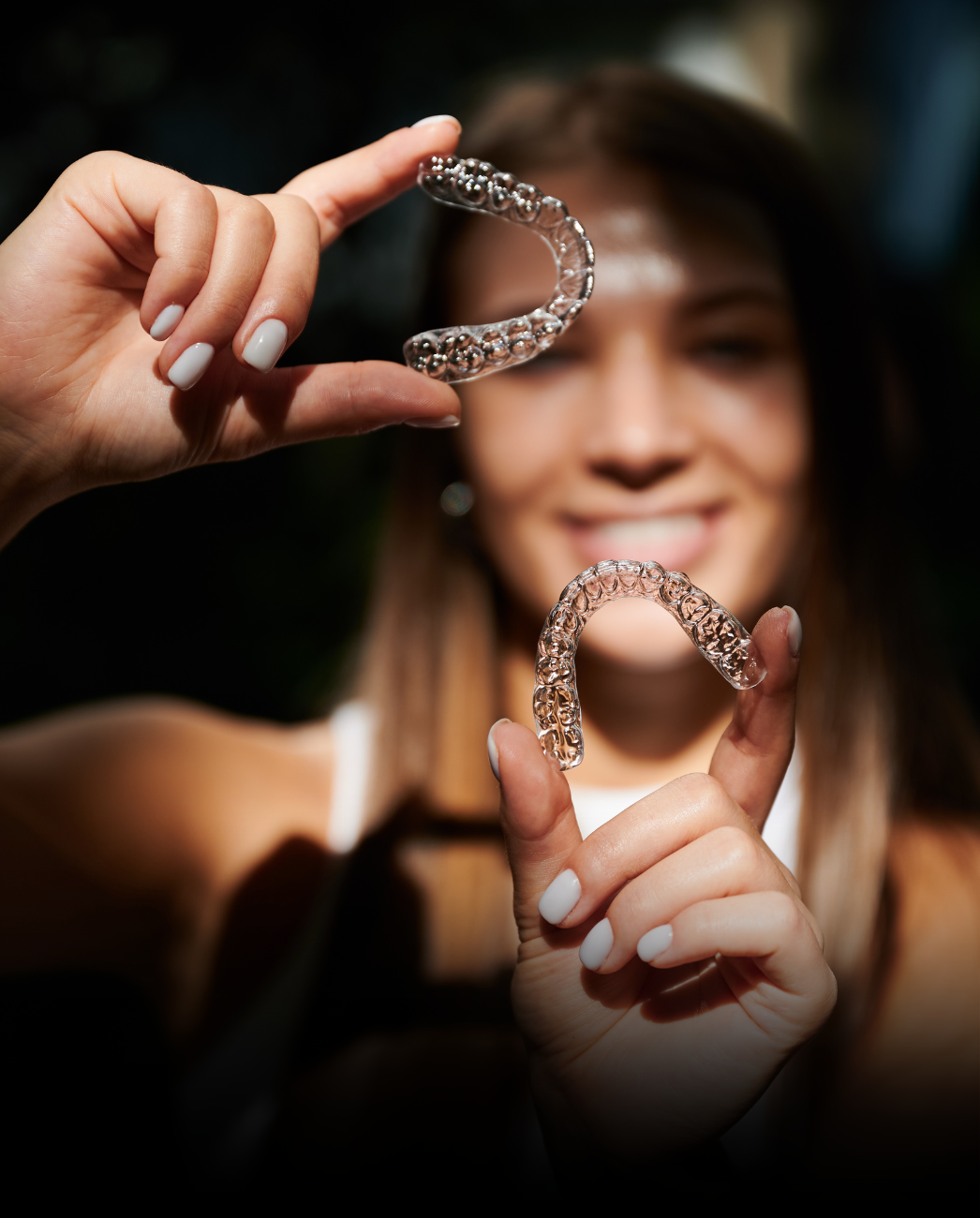
Some movements need a little extra help. We use small tooth-coloured attachments — discreet bumps of resin bonded to a few of the teeth — to give the aligners something to push against for rotations and bodily movement. They are barely visible, come off cleanly at the end of treatment, and make the difference between an aligner that drifts teeth and one that genuinely controls them. If, at the end of the planned sequence, one or two teeth haven't quite landed where we wanted, we re-scan and run a short refinement series at no additional cost.
Retainers — keeping the result
Teeth that have been moved will, given the chance, drift back. Every aligner case finishes with retainers — clear, thin trays worn at night — to hold the new position. We provide them as a matter of course at the end of treatment, and we'll replace them as they wear, so the work you've put in stays put. Aligner therapy without a retainer plan is a result with an expiry date; we don't recommend it.
Is it right for me?
Aligners work for crowding, spacing, mild to moderate bite issues, and almost all of the cosmetic alignment cases people come in asking about. They work equally well for adults and teenagers, and they pair beautifully with whitening and bonding at the end to finish the smile. There are a small number of complex orthodontic cases where fixed appliances or a combined approach still give a better result, and we'll tell you honestly if yours is one of them. For everyone else, the first step is a consultation and a scan — and a look at the digital plan that comes out of it.